

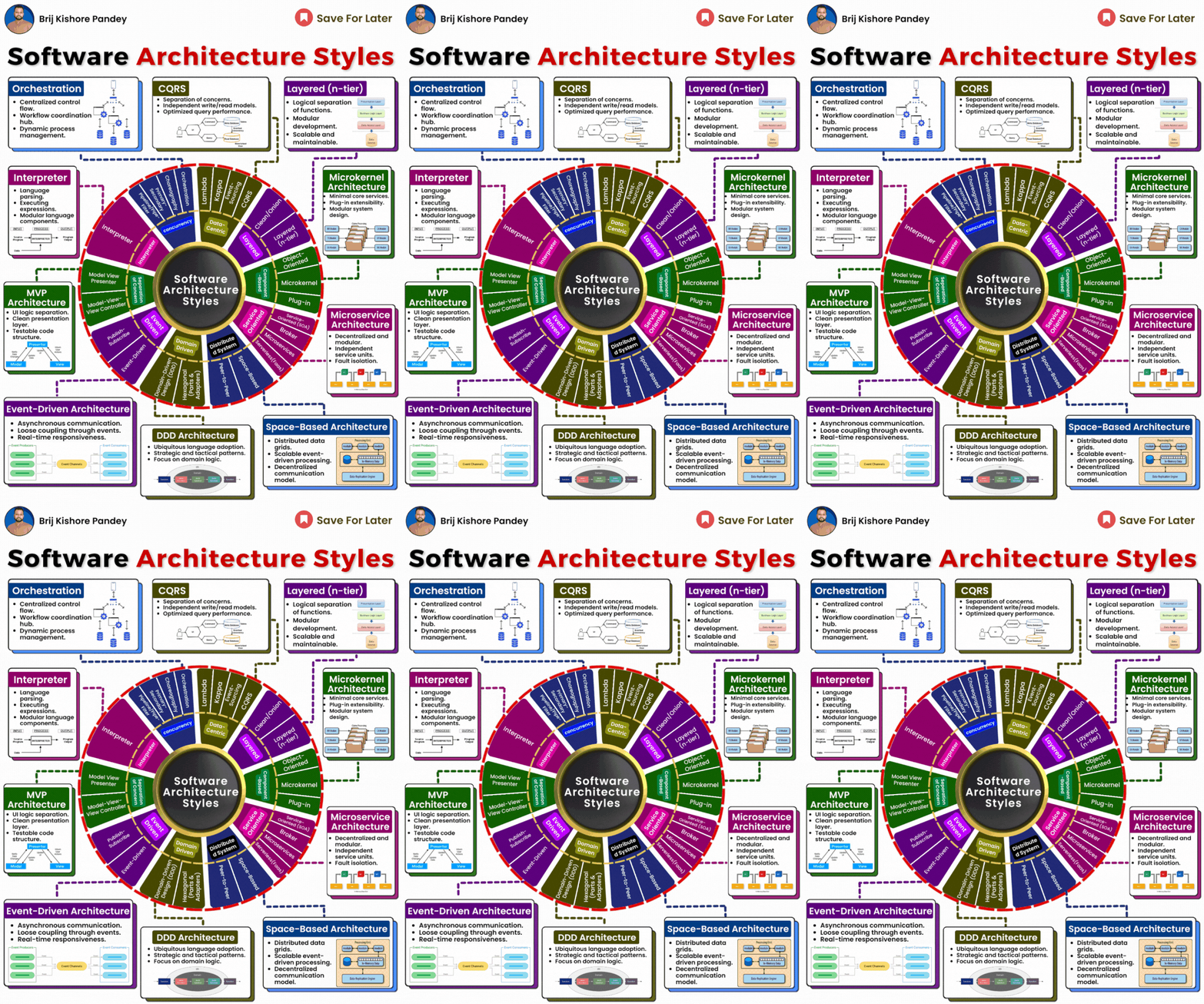
1. Orchestration: Think of this as the conductor of an orchestra. It’s all about centralized control and coordination, perfect for managing complex, distributed systems.
2. CQRS (Command Query Responsibility Segregation): This one’s a mouthful! It’s about separating how you read data from how you write it. Great for performance optimization.
3. Layered (n-tier): The classic approach. It’s like a cake – each layer has its own job. Makes code organization a breeze.
4. Microkernel: Imagine a tiny, powerful core with plugins. Super flexible and great for product-based applications.
5. Microservices: The buzz of the tech world. It’s about breaking your app into small, independent services. Scalability dream!
6. Event-Driven: For when you need your system to react quickly to changes. Think real-time applications.
7. MVP (Model-View-Presenter): A pattern that makes your user interfaces easier to test and maintain.
8. DDD (Domain-Driven Design): This one’s about making your code speak the language of the business. Crucial for complex domains.
9. Space-Based: Designed for high scalability, using in-memory data grids. Perfect for applications with unpredictable load.
But wait, there’s more! The diagram also covers:
– Interpreter
– Pipes and Filters
– Blackboard
– Rule-based
– Peer-to-peer
– Implicit invocation
– And several others!
Why is this important? Well, choosing the right architecture can make or break your software. It affects everything from performance to maintainability to how easily your team can work together.
Remember, there’s no one-size-fits-all in architecture. The best approach often involves mixing and matching these styles based on your specific needs.
Credits:
x.com/sina_riyahi
medium.com/@Sina-Riyahi
Instagram.com/Cna_Riyahi
github.com/sinariyahi